







 February 23, 2026
As I read President Miguel Meléndez Jr.’s Report on Homelessness, I was struck by a deep sadness, because it feels as though the heart of the issue is being missed.
The report correctly identifies homelessness as a public health crisis. I agree wholeheartedly. But a public health crisis for whom? Much of the discussion focuses on the impacts experienced by housed residents, while giving far less attention to the people who are most directly and severely harmed by homelessness itself.
This imbalance is especially evident in the way overdose deaths are discussed. While the report acknowledges that unhoused people die from many causes beyond overdose, overdose death is primarily framed as something traumatic for others to witness. Of course it is. But what is largely absent is any meaningful acknowledgment of the cumulative harm homelessness inflicts on people experiencing it. Unhoused residents die not only from overdoses, but from untreated cancer, strokes, diabetes without access to insulin, infections, and exposure to extreme cold. How many unhoused people die in Rochester each year? How many have frozen to death outdoors? I personally know of at least one man this year. That data is missing from this report.
The report’s own data further reflects this gap. Only 11 percent of survey respondents were people experiencing homelessness. This is unsurprising given that participation required internet access through a QR code and online form, tools many unhoused people do not have. As a result, the voices of those most affected were largely excluded from the findings.
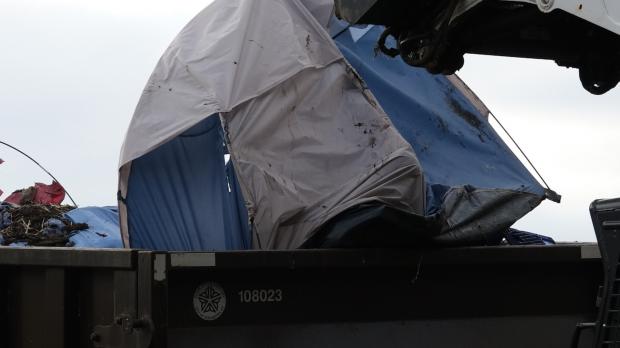
The report acknowledges that closing encampments and removing outdoor sharps containers has worsened conditions by displacing people, severing relationships with outreach workers, and increasing hazards in public spaces. Health and recovery providers testified that Rochester’s health and housing systems are not equipped to meet the serious medical and behavioral needs of unhoused residents and urged the adoption of harm reduction strategies.
Despite this testimony, the report recommends continued encampment sweeps or “closures” under the banner of a public health and safety approach. This is a contradiction.
A true public health response does not begin with displacement. Declaring that encampments cannot persist in residential areas before safe and accessible alternatives actually exist guarantees harm. Encampment sweeps without housing or truly low barrier shelter increase overdose risk, disrupt medical care, and push people into more dangerous and less visible conditions.
The inclusion of law enforcement in response to homelessness undermines any claim to a public health approach. It escalates situations that require care, not enforcement. Police are not healthcare providers, housing specialists, or trauma informed responders. Their presence deters people from engaging with outreach, increases fear and mistrust, and too often results in citations, arrests, or displacement rather than assistance.
Homelessness is not a criminal condition. People experiencing homelessness should not be managed through policing. A public health response must be led by housing professionals, healthcare workers, harm reduction providers, and trained outreach teams, without law enforcement involvement.
The report frames neighborhood wellbeing and the dignity of unhoused residents as interests that must be balanced. In reality, these interests are not in conflict. Homeowners want clean, safe, and stable neighborhoods. Unhoused people want safety, stability, and access to care. The solution to both is housing. Sweeps do not resolve neighborhood concerns. They relocate them. Housing resolves them.
The conditions described as public safety concerns such as syringe litter, public defecation, and visible distress are not failures of safety. They are failures of public health infrastructure. They reflect the absence of housing, bathrooms, trash service, healthcare, and harm reduction. Addressing these symptoms through enforcement rather than care has repeatedly failed.
When advocates say homelessness is a public health crisis, we are speaking first and foremost about the health and safety of people living without shelter. The safety of all residents matters. But policies that repeatedly displace people who are already vulnerable reveal whose lives are being prioritized.
I say this not out of disregard for housed residents, but out of concern for those facing the most immediate risk of illness and death. If the City is serious about compassion, dignity, and community wellbeing, it must stop encampment sweeps and focus on safe, voluntary alternatives and place-housing first public health strategies at the center of its response.
Lives depend on it.
Mickey DiPerna is a housing justice advocate and community organizer with Rochester Grants Pass Resistance in Rochester, NY. Their advocacy is informed by lived experience with homelessness and substance-use disorder in their family.










 Prev Post